A glass top stove instantly elevates the look of your kitchen—sleek, modern, and easy to wipe down at first glance. But if you use it daily, you already know how quickly grease splatters, burnt-on food, and stubborn stains can steal its shine. The good news? Learning How to Clean a Glass Top Stove (Easy & Safe Methods) doesn’t require harsh chemicals or expensive products. With the right approach, you can keep your stove spotless without scratching or damaging the surface.
This guide walks you through simple, proven, and safe cleaning methods that work for everyday messes, tough burnt stains, and even cloudy residue—while also helping you avoid common mistakes that shorten your stove’s lifespan.
Why Glass Top Stoves Need Special Care
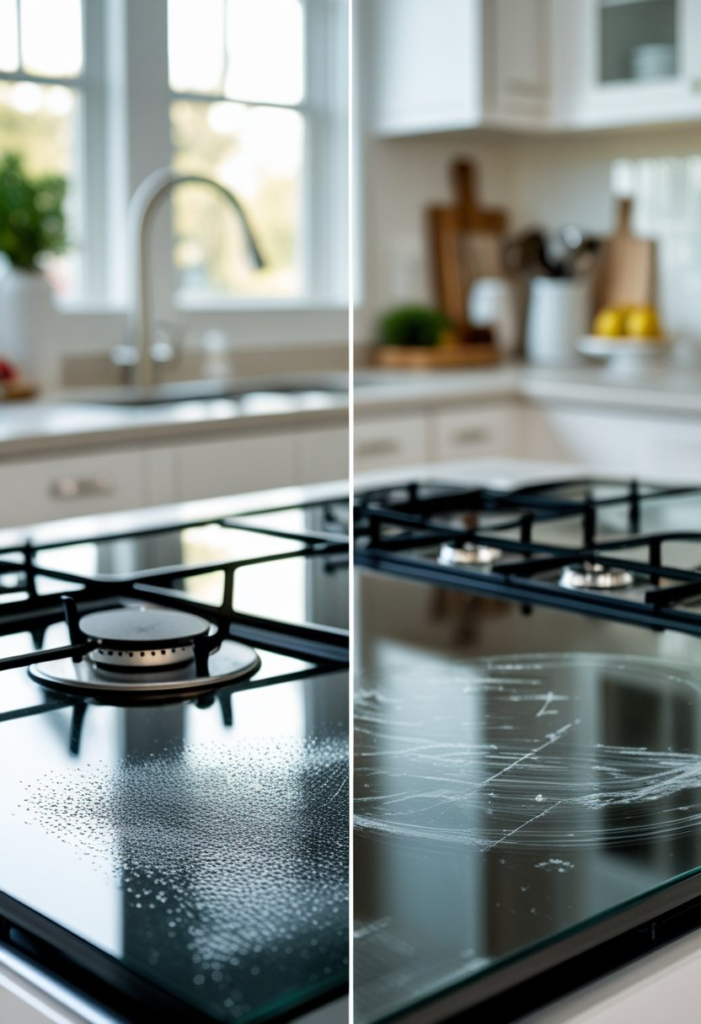
Unlike traditional gas burners, glass cooktops are made from ceramic glass. They’re durable but not indestructible. Abrasive scrubbers, harsh chemicals, and improper tools can cause micro-scratches or permanent damage over time.
Regular gentle cleaning not only keeps your stove looking new but also:
- Improves cooking efficiency
- Prevents burnt-on buildup
- Reduces the risk of scratches and discoloration
If you’ve already noticed marks or light damage, you may find it helpful to explore this guide on how to remove scratches from a glass stove for targeted fixes.
What You’ll Need to Clean a Glass Top Stove Safely
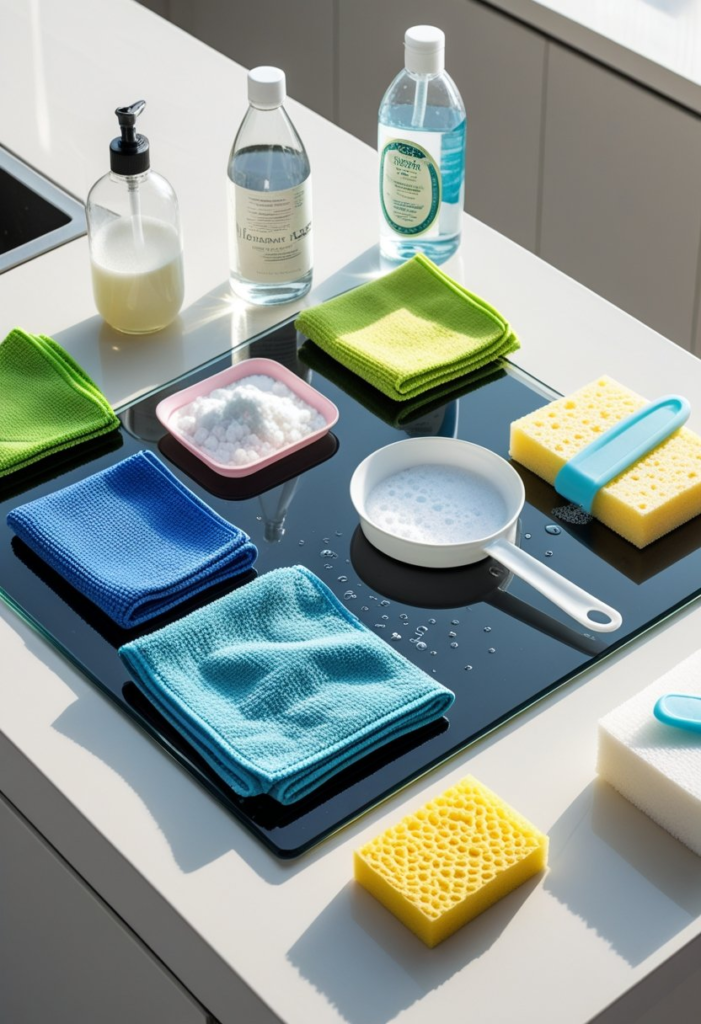
Before you start, gather these common household items:
- Microfiber cloths or soft sponges
- Baking soda
- White vinegar
- Dish soap
- Warm water
- Plastic scraper or razor blade (designed for glass cooktops)
Optional but helpful tools can also be found in this roundup of best Amazon kitchen tools to make cleaning faster and safer.
How to Clean a Glass Top Stove
Daily cleaning prevents grime from turning into stubborn stains.
Step-by-Step Daily Cleaning
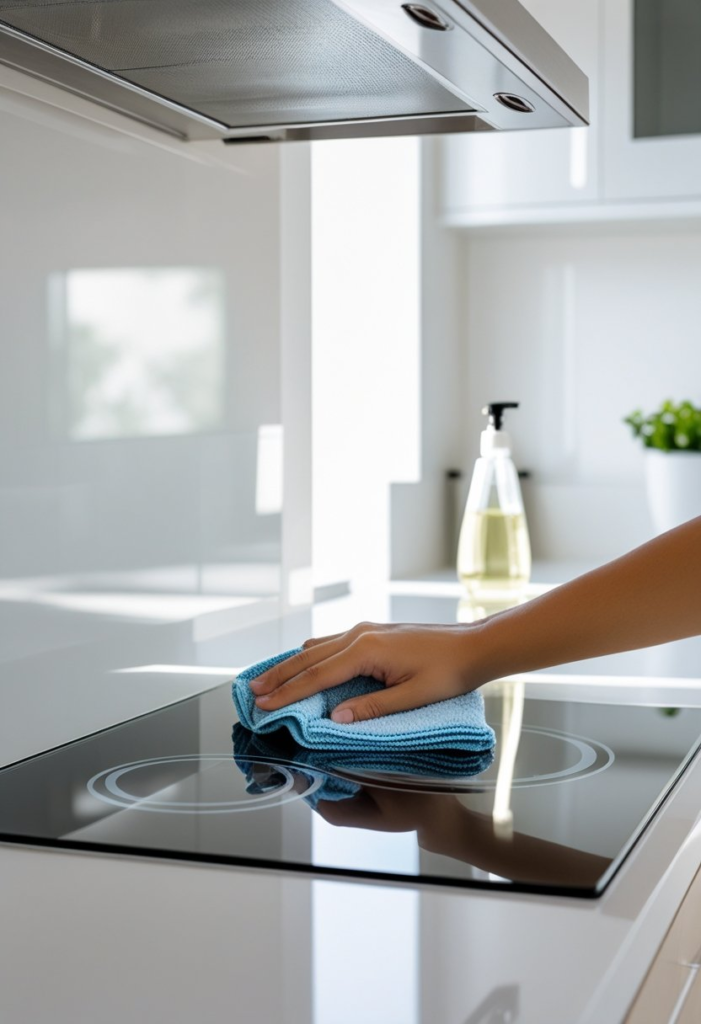
- Let the stove cool completely. Never clean a hot glass surface.
- Wipe loose debris with a dry microfiber cloth.
- Mix warm water with a few drops of dish soap.
- Gently wipe the surface, focusing on splatters and fingerprints.
- Dry with a clean cloth to avoid streaks.
This simple routine takes less than five minutes and keeps your stove looking polished.
Deep Cleaning a Glass Top Stove with Baking Soda and Vinegar

For burnt-on food and greasy buildup, baking soda and vinegar work wonders.
How to Do It
- Sprinkle baking soda generously over the stained areas.
- Spray white vinegar over the baking soda until it fizzes.
- Lay a warm, damp microfiber cloth over the surface.
- Let it sit for 10–15 minutes.
- Gently wipe in circular motions.
- Rinse with a clean damp cloth and dry.
This method is especially effective for removing cloudy residue.
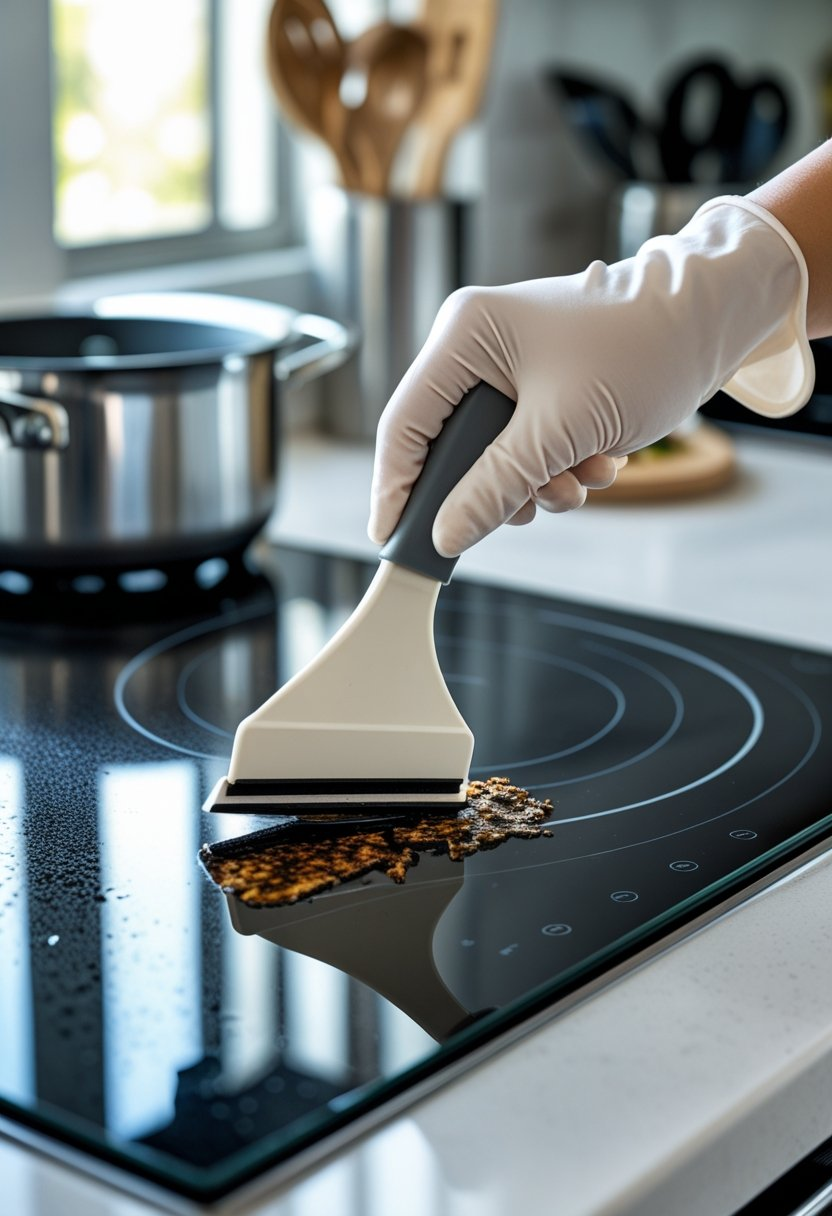
Removing Burnt-On Food Without Scratching
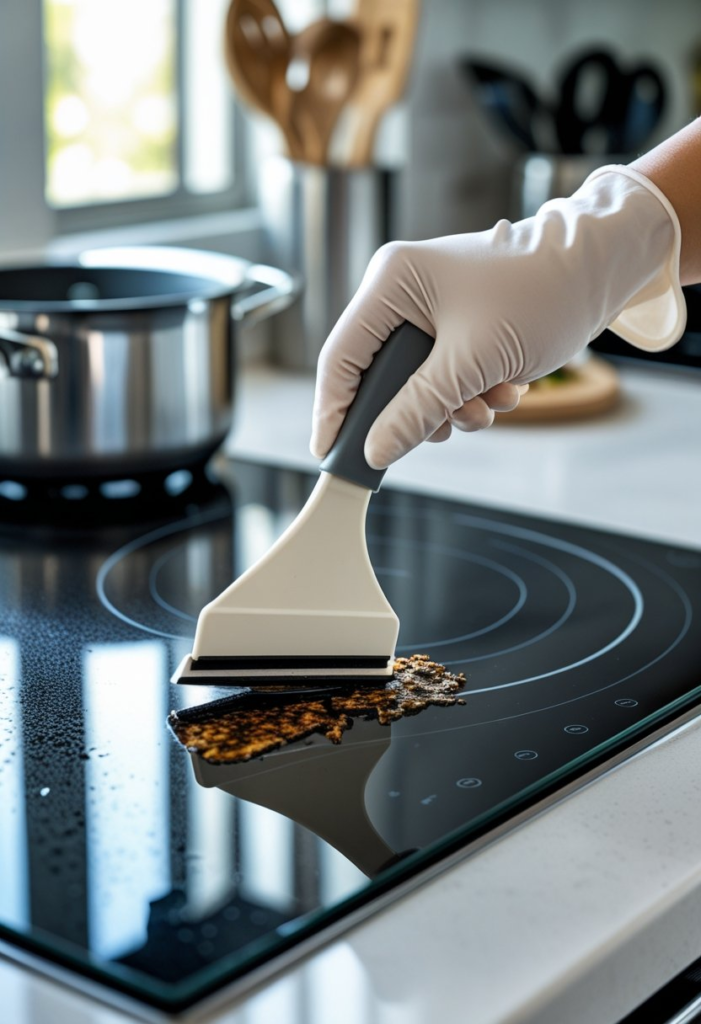
Burnt sugar, pasta water, and oil spills can harden quickly.
Safe Scraping Technique
- Use a plastic scraper or a cooktop-safe razor blade.
- Hold it at a 45-degree angle.
- Gently slide under the residue—never dig or press hard.
- Follow up with the baking soda method above.
Avoid steel wool or rough sponges, which can permanently scratch the surface.
How to Remove Streaks and Cloudy Film
If your glass stove looks clean but dull, leftover residue is usually the culprit.
Fix It Fast
- Spray vinegar lightly across the surface.
- Buff with a dry microfiber cloth.
- Finish with a few drops of olive oil on a cloth for extra shine (optional).
This polishing trick works similarly to restoring shine on floors. For other surfaces around your home, check out make laminate floors shine for comparable techniques.
What Not to Use on a Glass Top Stove
Avoid these at all costs:
- Abrasive powders
- Steel wool or rough scrub pads
- Ammonia-based cleaners
- Oven cleaners
- Excess water pooling near edges
Using the wrong products can lead to permanent damage that no amount of cleaning can fix.
Natural Alternatives for Chemical-Free Cleaning
If you prefer non-toxic solutions, you’re already on the right track. Baking soda and vinegar are powerful natural cleaners.
You can also:
- Use lemon juice for degreasing
- Steam-clean stubborn spots with a hot, damp cloth
These eco-friendly options are safe for homes with kids and pets.
How Often Should You Clean a Glass Top Stove?
- Daily: Quick wipe after cooking
- Weekly: Baking soda deep clean
- Monthly: Inspect for scratches or stains
Consistent care prevents buildup and extends the life of your cooktop.
Cleaning Around the Stove Area for a Fresher Kitchen
A clean stove shines even more when the surrounding area is fresh.
Consider:
- Degreasing nearby counters
- Wiping backsplash tiles
- Deodorizing the kitchen space
Preventing Future Messes on Your Glass Top Stove

Prevention is easier than scrubbing later.
Smart Habits to Adopt
- Wipe spills immediately once cooled
- Use cookware with flat, clean bottoms
- Avoid dragging pots across the surface
- Don’t let sugary spills sit—they can etch glass
Maintaining good habits reduces the need for deep cleaning and protects the surface long-term.
When Stains Won’t Budge: What to Do Next
If stains persist despite your best efforts:
- Try a commercial glass cooktop cleaner
- Repeat baking soda treatment with longer soaking
- Check for surface damage rather than dirt
Final Thoughts:
Mastering How to Clean a Glass Top Stove (Easy & Safe Methods) doesn’t require special skills—just consistency, gentle tools, and the right techniques. By cleaning daily, tackling spills quickly, and using non-abrasive methods, you can enjoy a spotless, glossy cooktop that enhances your entire kitchen.
A little care goes a long way. Treat your glass stove kindly, and it will reward you with years of shine, performance, and effortless style.